Home

iraq

Kathy Kelly: The Power of Peace

Researched, Produced and Directed by Abir Alsayed

A part of Asdekaa Al Arab series

Casualties of Iraq, Nine Years Later

March 20, 2012

Download A Printable Version of This Resource

BACKGROUND: Nine years ago, on March 19, 2003, the US invasion of Iraq began with a bombing campaign nicknamed “Shock and Awe.” In December, 2011, US combat troops withdrew from Iraq in what was highly publicized as “the end of the war.” But ever since the Iraqi government fell in April, 2003, the “war” has been an occupation, which continues today with an ongoing US presence, including the world’s largest embassy.

What were the costs of the war and occupation? What lies ahead for the Iraqi people? Why would peace groups call for the US to get out of Iraq if the military has already withdrawn? Here are some facts to help explain.

Death and Public Relations

“You go to the chaplain, who tells you Jesus will save your soul if you accept him. Then you see the wizard — the battalion psychiatrist. He medicates you and gets you out the door. That’s it. I never had anyone to talk to. When I did try to talk, I was told to take more medication.”

Bert Sacks: No Fine and No Court Time for Iraqi Sanctions

by Bruce Ramsey
January 10, 2012
The Seattle Times

The federal case against Bert Sacks, the Seattle activist fined for violation of the Trading with the Enemy Act, was dismissed Dec. 28—and Sacks is not too happy about it.

Sacks wanted a jury trial. He wanted to argue in public court that in the 1990s the U.S. government had committed an act of terrorism by destroying Iraq’s water purification plants during the first Gulf War and using economic sanctions to block their repair. Sacks cited UNICEF and other sources that hundreds of thousands of Iraqi children had died from the effects of unclean water and no medicine. In Sacks’ view, they had been killed by the United States as surely as if our government had bombed them.

Seeking a Shore

Seeking a Shore

February, 2011

After Hosni Mubarak resigned

I

In 2004, in the days after the tsunami spread its wide, heavy body
over Indonesia and Thailand and Sri Lanka and India,
crushing homes, hospitals, schools,
videos of the wave were posted online and shared electronically.
Accustomed to viewing explosions, raging waters, hurricane winds,
some people who watched
from the dry comfort of their homes or offices were disappointed.
The wave didn’t impress.
They would have been even more disappointed
had they followed the wave
as it moved through deep ocean waters,
only the crown of its head visible.
People failed to recognize its unity and dimensions,
how it had leapt from the sea floor,
gathered itself from so many individual particles of water,
and traveled hundreds of miles
remaining intact,
how its legs extended deep into the ocean.

A Letter from Cathy Breen

New York City, December 8, 2010

They say she cries tears of oil, and that occasionally there is a hint of a smile on her face. The story has it that the statue is owned by a Muslim woman in Windsor, Canada.

When the statue began to shed tears, it created such a furor in the town with crowds thronging to see her, that the statue was transferred to a little church. I was taken to see her just a few days ago by an Armenian Iraqi family I was visiting in Canada. The church was open and we were the only visitors. Almost life sized, Mary was indeed smiling down on us. We saw no trace of tears, though her eyes were large and luminous and it was easy to imagine her weeping. The thought that went through my mind was that Mary only cries when we stop crying. Crying for the ongoing suffering due to our wars, for families uprooted and separated from their loved ones, for families still burying their dead and trying themselves to escape the ongoing violence and killing in Iraq.

A Conversation with Firas Majeed of Native Without a Nation


November 18, 2010

Joshua: Do you see this kind of idea being maybe even able to prevent future wars? Because, I think, one of the problems is that we don’t know each other. And if we are able to know each other, we realize that there is no reason to fight.

Firas: Yeah, you’re right. That’s what exactly happen. And people, the children, they are not children. They are going to lead the world after us. And we need to prepare all our children, your children and our children, prepare them to lead the world better than now.

After the journey — a UN man’s open letter to Tony Blair

Dear Mr Blair,

You do not know me. Why should you? Or maybe you should have known me and the many other UN officials who struggled in Iraq when you prepared your Iraq policy. Reading the Iraq details of your “journey”, as told in your memoir, has confirmed my fears. You tell a story of a leader, but not of a statesman. You could have, at least belatedly, set the record straight. Instead you repeat all the arguments we have heard before, such as why sanctions had to be the way they were; why the fear of Saddam Hussein outweighed the fear of crossing the line between concern for people and power politics; why Iraq ended up as a human garbage can. You preferred to latch on to Bill Clinton’s 1998 Iraq Liberation Act and George W Bush’s determination to implement it.

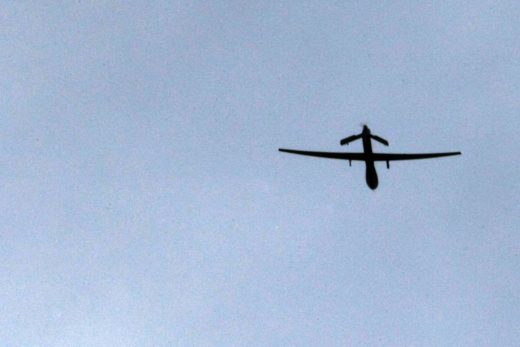
The Bomb and the Drone: Hiroshima/Nagasaki and Iraq/Afghanistan/Pakistan

The Bomb and the Drone: Hiroshima/Nagasaki and Iraq/Afghanistan/Pakistan

Even though August 6th and 9th are past, the lessons of Hiroshima and Nagasaki belong always before us. The agony of those two cities must remain our dark beacon.

Hiroshima/Nagasaki wasn’t so much about targets as about audiences. We sacrificed a couple hundred thousand harmless, unarmed, undefended human beings to make a point. That spectacle wasn’t so much for Japan as for the Soviet Union and the world at large.

Thanks to the U.S. head start on nuclear technology – vividly showcased at Hiroshima/Nagasaki – for 65 years the U.S. has been able to hold the planet hostage. It’s been able to deploy nuclear blackmail to further its hegemonic design.

Letter From Kathy Breen, June 7 2010

Just a half an hour ago I got an email from a doctor friend in Baghdad whom I wrote just last night asking about their well-being. ” …we are always thinking that being not alone is a grace. We are passing hard times….the hot summer is not hotter than the fire inside our hearts from the chaos we are living and the tragic stories we are witnessing everyday.”

Syndicate content